Inside the FireCat Amp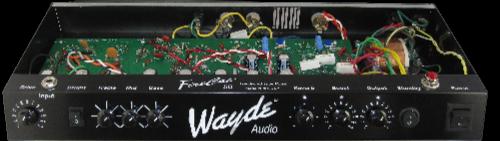
Wayde Audio FireCat amps are built using classic tube circuits updated with modern design.
Saving the tone of the classic amps and unafraid to move forward with modern components and designs that improve and redefine the state of the art musical amplifier.
The amp is based on a American style preamp and reverb setup and a British power section. Add to that a Hi-Fi master volume which does not change the tone when turned down and you get an amp that let's you the player, not the amp, control the type of sound you get. You're hear your guitar's tone, then the amp's tone. You come first.

Preamp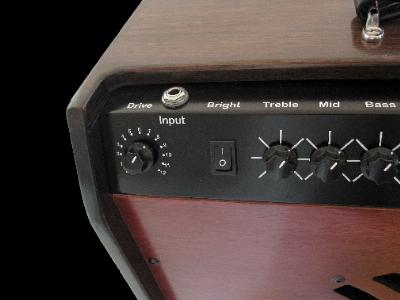
Let the sound begin!
The preamp is based on the black face Fender™ amp of the 60's with some mods to give a fuller more british bass tone. The passive three knob tone circuit, similar to the one used in Fender™ black face Bassman™ and Twin Reverb™*, is placed directly after the first gain stage. This is followed by the second stage. This preamp as setup in a FireCat amp provides a clean sound that breaks up nicely when cranked up past 6 on the preamp "Drive" control.
Reverb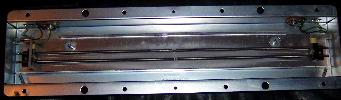
"What we need is a little more of that there Reee..verb"
The preamp is then split, one side going to the reverb for the 'wet' sound and the other to the 'dry' side. The reverb is based on the classic tube reverb circuit designed by Leo Fender. Leo had a great ear and this circuit still has the best sound produced today. This design uses a tube which powers a transformer to drive the classic 2 spring long delay reverb tank. This is the same reverb tank used in the classic amps. After the 'wet' and 'dry signals are mixed back together the signal is sent to the phase splitter.
Output Volume / Phase Splitter
When is a master volume not a master volume? When it's turned all the way up!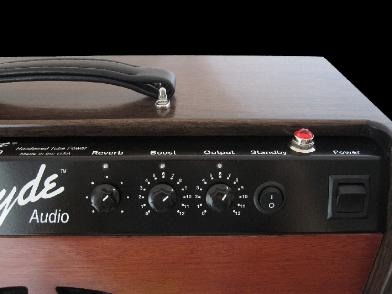
This is where the signal gets to the output volume control and creates two "out of phase" mirror images of the input. These two signals are used for the classic "push - pull" class AB power amp. The phase inverter is the "long tail" circuit used in most modern guitar amplifiers for many years. The master volume control, more aptly named "Output" is built into the phase splitter circuit. This form of master volume control is normally only used in high end professional audio systems. It creates and active volume control that has advantages over the standard methods that virtually all other guitar amplifiers use today. The other circuits just redirect some of the signal to ground and reduce the level. One advantage to the method used in all Wayde Audio amps is the active control will maintain the tone of amp even when turned down. Other master volumes will lose bass and sound thin when turned down. This change in tone is why many players hate master volumes. Another advantage of the Output Volume control used in FireCat amps is that when the control is turned all the way up it's essentially out of the circuit. The design makes it so when the control is set to twelve the phase splitter circuit is exactly the same as if the master volume control was not there. Conventional circuits can't say that.
Using the unique Drive and Output controls you can get a clean tone or different types of overdrive/distortion tones.
How is this done?
By setting Drive and the Output to low to middle levels you'll get a clean tone. When increased to the edge of overdrive you get that Blues tone which breaks up when you dig in.
If you bring the Drive level up to 10 you can start overdriving the preamp tube and the phase inverter tube before the output tubes. This gives a gritty stomp box overdrive that can be played at even low Output volume. You get singing sustaining sounds at bedroom practice levels or club size rooms. If you bring the Output volume above 2 the output tubes will also overdrive.
If you bring the Drive level back down to 8 you can get the phase inverter tube to overdrive levels before the preamp and output tubes. Phase inverter distortion is what British amplifiers are famous for.
Now If you bring the Drive level back down to a clean tone and set the Output up you'll get pure output tube distortion. This is what American amplifiers are famous for.
FireCat amps let you choose the type of tone you want, always preserving the distinctive sound of the strings and wood of your guitar and your playing style.
Here's a chart showing the general setting to get these tones*. You'll want to dial in your sound.
 |
Drive Level |
Output Level |
Clean Blues |
6 |
6 or less |
Gritty Overdrive |
10 or more |
2 or less |
British Amp |
8 |
6 |
American Amp |
2 |
10 |
* Treble level set to just under 3 O'Clock. Guitar level to 10. Set Amp level higher for lower output pickups.
Note that FireCat Amps go to 12!
Boost Mode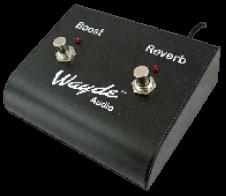
Need a Boost for the lead?
The Boost mode is just what you want. FireCat amps are now available with the Boost Mode. A foot switchable setting that boosts the volume by up to 10 decibels, controlled boost volume knob.. It's great to kick in when when it's time for a lead.An LED indicator on the switch and the amp will tell you if it on or off.
Reverb Switch
The reverb in a FireCat amp can be used as an effect in it self. The sound can be subtle or huge. Turn up the reverb can be as big as a ely effect. The foot switch gives you the control and LED indication of it's state.
Now for the Power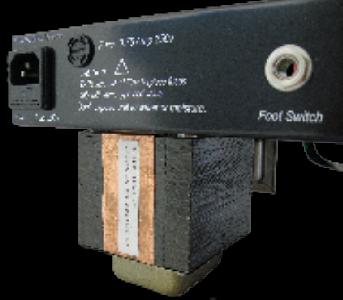
Let's take the best from both worlds
The power amp comes next. Based on the Fender™ and Marshall™ output stages. The FireCat amps have minimal negative feedback like a Marshall and input levels like a Fender. Enhanced with features that make the output stage more reliable and sound tighter. Each output tube has an individual bias control that, in most amps, is user settable so you can use any brand of tubes and in the FireCat amps you don't need matched tubes because you can set the bias to match the tube.
The power supply is a Marshall style silicon type for extra voltage and headroom power, coupled with a rectifier tube emulator circuit to give you the 'sag' and feel you expect from a tube amp. You get the best of both worlds. Beyond that the power supply uses isolated connections to each gain stage in the amp. Yes, this cost more and is not done by classic amps. It gives each stage protection from being negatively effected by the other stages in the amp. This gives FireCat amps the clarity and sustain that can't be beat.
Transformers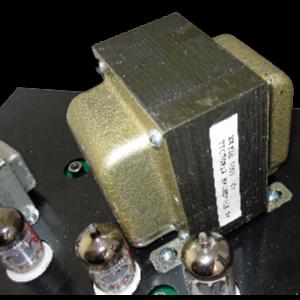
The Heart of the Amp
The transformers or the "Iron" are the heart of the amp and the most important component. Wayde Audio uses custom made transformers made in the USA by VIctoria Magnetics. Designed by an old school highly experienced magnetics engineer who worked for Ampeg when tube amps were born. Designed and custom made for Wayde Audio FireCat amps these transformers are as good as it gets. Modern technologies with old school design.
The Power transformer uses Teflon coated wire which will withstand extremely high temperatures. This allows the use of a smaller lighter transformer with the same power of a larger model. Each winding in the trasformer is precisely matched for even distribution of the energy and long life.
The Output transformers are designed to Audiophile standards with the frequency ranging from 20 to 20k Hz. This is gives the amp the ability to use the full range of the audio spectrum. Each transformer has 13 layers of winding. Most mass market output transformers I've seen only have three layers which can cause them to be unbalanced. The extra layers allow more efficiency and balance producing the best tone and smooth response when overdriven.
Grounding
Ground control to Major Tom... the circuits live, there's nothing wrong.
The grounding method isolates the chassis from all signal grounds until the last connection is made. This is used to reduce buzzing from ground loops. This grounding method isolates the grounds in each stage so the low level signals are not corrupted by high level signals or power supply noise. Each stage is grounded locally to it's individual power connection then each node is connected from low signal to stronger signal. This creates an amp that is so quiet you won't believe it's an all tube amp.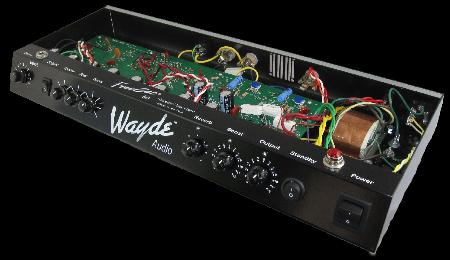
Custom Made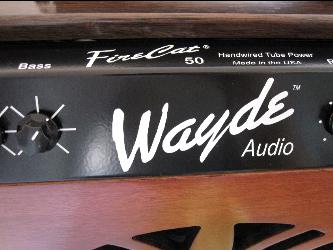
They don't make them like this anymore
Construction uses hand laid out, custom designed PC boards made of high quality materials. The two sided board uses thicker copper traces than mass market amps. The layout is hand designed to create a clean signal path with the least interference with the other components. This also allows components to be placed directly next to the tubes pins which provides the best connection and lowest loss of high frequency sounds. Our circuit board is much higher quality than what is used in most modern production amplifiers and is not the same old "card board" as used in old classic amps. You get higher quality and consistency in the production.The FireCat amp brings modern construction advantages without the losing the tone in the process.
Cabinets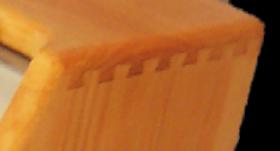
Dovetail Joints: "I don't know what that means, but I know I want it."
Each cabinet is professionally made by a family owned high end cabinet manufacturer in the USA. We're using the finest solid woods and Eco-Friendly woods such as Lyptus. Dovetail joints are used to give strength as well as great looks.
Moving Forward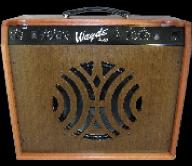
We can't go back now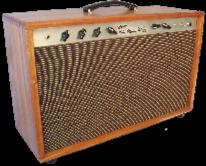
The FireCat amps are modern versions of old designs. Wayde Audio is not afraid to move forward yet will not move forward for the sake of economy at the cost of tone. This is new construction of well known circuits with innovations and modern techniques. Don't be afraid to move into the modern world of new iconic designs! Get a FireCat amp today.
The FireCat 25 and FireCat 50 Amps were formally known as The Balls Amp and The Blues Balls Amp.
